
Internal Linking Best Practices: Optimising Service, Sector, and Pricing Pages
Explore internal linking best practices for service, sector, and pricing pages. Boost your Manchester website's SEO and user experience effortlessly.
Internal linking is a cornerstone of effective website SEO, but it’s often overlooked or misunderstood. When implemented correctly, internal linking best practices can transform your service, sector, and pricing pages—boosting search rankings, improving user journeys, and driving more conversions. In this article, you’ll discover proven strategies to structure your internal links for maximum impact, with actionable tips specifically for Manchester businesses looking to enhance their online presence.
Understanding the Importance of Internal Linking
### Why is Internal Linking Critical for SEO? Internal linking refers to hyperlinks that connect one page of your website to another page within the same domain. While external backlinks earn much of the SEO spotlight, internal links play a pivotal role in shaping your site’s visibility and performance. By distributing ‘link equity’ or authority across key pages, you signal to search engines which pages are most important, helping them crawl and index your site more effectively.
For businesses in Manchester and beyond, strategic internal linking can: - Guide visitors to high-value pages (such as services, sectors, and pricing) - Enhance crawlability and indexation for newly launched offerings - Boost the authority of underperforming or newly created pages - Reduce bounce rates by keeping users engaged longer
### How Do Internal Links Affect User Experience? A well-structured internal linking approach ensures visitors can quickly find relevant information. For example, linking from a sector page to a related service page allows potential clients to easily explore how your expertise applies in their industry. This seamless navigation helps build trust and increases the likelihood of conversion.
Internal Linking Best Practices for Structuring Service Pages
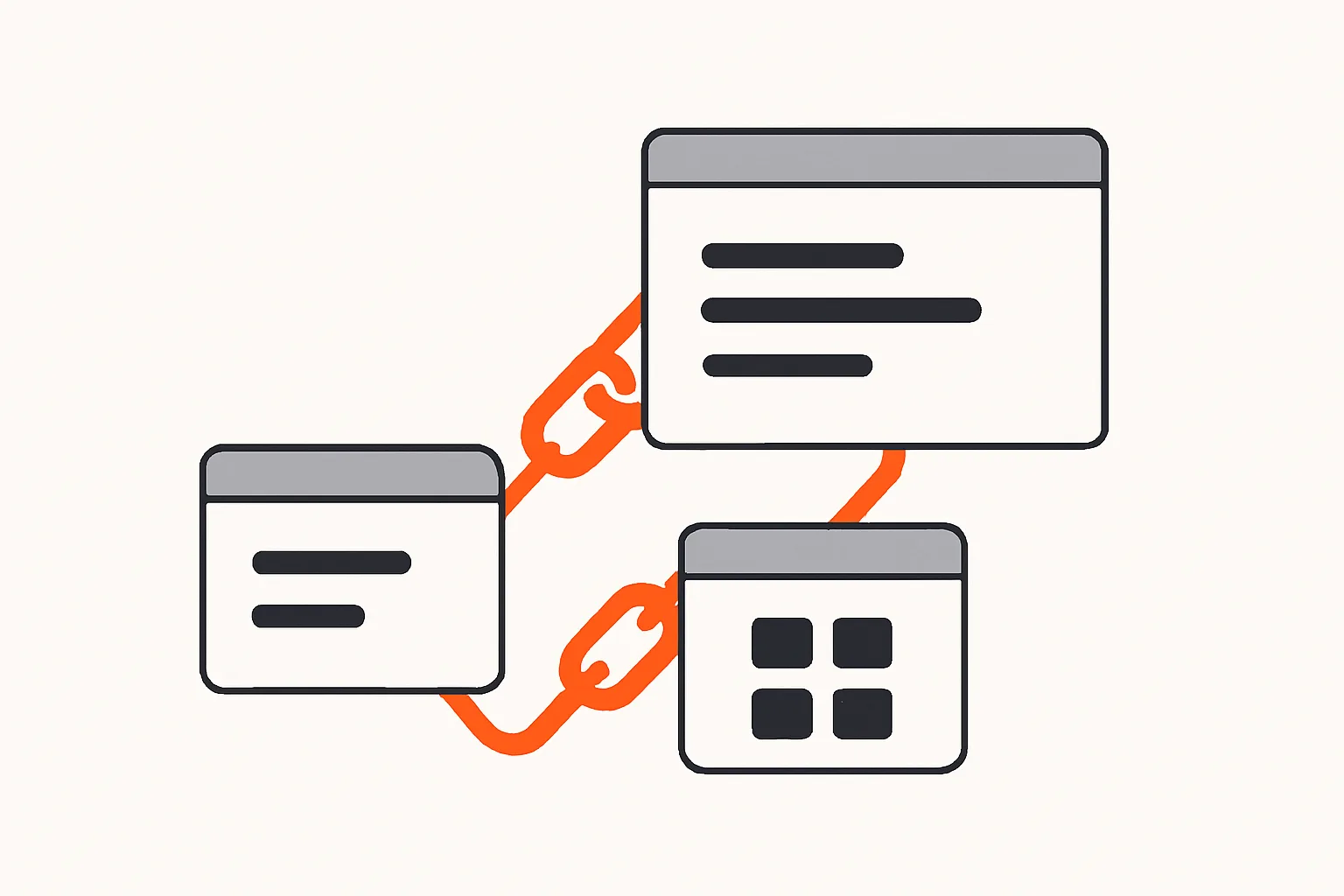
### Mapping Out Your Service Offerings Service pages are often the commercial backbone of a website. To maximise their SEO potential, they should not exist in isolation. Start by mapping out all your services and identifying logical relationships between them. For instance, if you offer both ‘AI Development’ and ‘Web Design’ in Manchester, ensure these pages mutually reference each other where relevant.
### Anchor Text: Relevance Over Repetition When linking between service pages, use descriptive, keyword-rich anchor text that clearly outlines the destination. Instead of generic terms like ‘click here’, opt for specific phrases such as AI development services or premium web design. This not only improves SEO signals but also clarifies the link’s purpose for users.
### Creating a Service Hub Structure Consider adopting a hub-and-spoke model. Your main ‘Services’ page acts as the hub, with individual service pages as spokes. Each spoke should link back to the hub and to other related services where it makes sense. For example, if you have a website maintenance offering, it should reference both web design and related sector solutions, facilitating smooth journeys for clients with evolving needs.
### Internal Linking Best Practices for Service Pages To fully leverage internal linking best practices, ensure each service page: - Links to at least two other related services or sector pages - References relevant blog articles or resources for further reading - Includes contextual links within the main content, not just in navigation menus - Uses varied, descriptive anchor text that reflects the page’s topic
This approach helps search engines understand the relationships between your services and supports users in discovering the full breadth of your expertise.
Leveraging Sector Pages for Contextual Authority
### Connecting Sectors to Services Sector pages demonstrate your expertise in delivering solutions tailored to specific industries. Effective internal linking here involves connecting each sector page to the most relevant services. For example, a ‘Healthcare’ sector page should point to AI-powered healthcare website solutions, while a ‘Retail’ sector page might reference eCommerce web design.
### Highlighting Case Studies and Testimonials Sector pages benefit from links to case studies, testimonials, or portfolio items. Linking to a Manchester healthcare website case study not only supports your authority in that sector but also provides social proof to prospective clients. This approach keeps users engaged and encourages them to explore your results-driven work.
### Avoiding Over-Optimisation While it’s tempting to link to every service from every sector page, focus on relevance. Too many internal links can dilute their value and overwhelm visitors. Prioritise quality over quantity: only link to genuinely related services and resources, using natural language.
### Internal Linking Best Practices for Sector Pages When applying internal linking best practices to sector pages: - Link to the most relevant services for each sector - Reference success stories, case studies, or testimonials for credibility - Connect to related blog content that addresses sector-specific challenges - Ensure links are placed contextually within the main content
This strategy strengthens your topical authority and helps both users and search engines navigate sector-specific expertise.
Optimising Pricing Pages for Trust and Conversion
### Linking Pricing to Services and Sectors Pricing pages are often a decisive step in the buyer’s journey. To support conversions, ensure each pricing option is linked directly to the corresponding service and, where appropriate, sector pages. For example, your web design pricing should link to the main web design service page and to case studies from sectors with similar budgets or requirements.
### Contextual FAQs and Resource Links Enhance your pricing pages by linking to relevant FAQs or knowledge base articles, such as how our pricing works. This not only pre-empts client questions but also demonstrates transparency—a crucial factor for Manchester businesses seeking trustworthy partners.
### Encouraging Enquiries Every pricing page should include clear internal links to your contact page or enquiry form. Use compelling anchor text like ‘Request a personalised quote’ or ‘Discuss your project with our Manchester team’ to drive action.
### Internal Linking Best Practices for Pricing Pages To optimise your pricing pages with internal linking best practices: - Link each pricing tier or option to the corresponding service page - Reference sector pages or case studies that align with client needs - Include links to FAQs, terms, or support resources for transparency - Use clear, action-oriented anchor text for enquiry links
This approach not only supports SEO but also builds trust and encourages users to take the next step.
Building a Strategic Internal Link Hierarchy
### Planning Your Site Architecture A coherent site structure underpins effective internal linking. Visualise your site as a pyramid: broad, high-level pages (like Services or Sectors) sit at the top, funnelling users down to more specific offerings, case studies, or pricing details. This hierarchical approach ensures link equity flows naturally from your most authoritative pages to those needing support.
### Prioritising High-Value Pages Not all pages require equal internal linking attention. Prioritise those that drive conversions or represent core offerings. For instance, if ‘AI development in Manchester’ is a key growth area, ensure it receives prominent links from related service, sector, and blog pages.
### Cross-Linking Between Content Types Don’t confine internal links to similar content types. Link blog posts to relevant service or sector pages, and vice versa. For example, an article on ‘latest web design trends in Manchester’ should link to your web design services and sector pages for agencies or eCommerce brands.
### Internal Linking Best Practices for Site Structure Applying internal linking best practices to your site hierarchy means: - Ensuring every important page is no more than three clicks from the homepage - Linking from top-level pages to deeper, related content - Using breadcrumbs and contextual links to reinforce site structure - Regularly reviewing your navigation and internal links for logical flow
This ensures both users and search engines can easily navigate your site and find key information.
Best Practices for Anchor Text and Link Placement
### Varied and Natural Anchor Text Google values diversity in anchor text. Repeating identical phrases can appear manipulative. Mix up your anchors—use ‘AI development services’, ‘AI solutions for retail’, or ‘bespoke AI platforms’—to reflect natural language, while still targeting key terms.
### Contextual Placement Matters Place internal links within the main body content, where they’re most likely to be seen and clicked. Sidebar or footer links are less valuable for SEO. Prioritise links higher up the page to increase their weight and visibility.
### Avoiding Common Pitfalls Don’t overdo internal linking—too many links on a single page can confuse users and search engines alike. Aim for 3-8 high-quality, relevant internal links per page, adjusting based on content length and complexity.
### Internal Linking Best Practices for Anchor Text To align with internal linking best practices: - Use a mix of exact-match, partial-match, and branded anchor text - Avoid over-optimising with repetitive keywords - Ensure anchor text is descriptive and relevant to the linked page - Place links naturally within sentences for better user engagement
Following these guidelines supports both SEO performance and a positive user experience.
Monitoring, Maintaining, and Scaling Your Internal Links
### Regular Audits and Link Updates Websites evolve, and so should your internal linking strategy. Schedule regular audits to identify broken links, outdated anchor text, or orphaned pages (those with few or no internal links). Tools like Screaming Frog or Sitebulb can help automate this process, ensuring your Manchester business site remains healthy and navigable.
### Adapting to New Offerings or Sectors As you launch new services or expand into additional sectors, promptly update your internal linking structure. Add links to new pages from relevant existing content and ensure they’re included in your primary navigation or hubs.
### Tracking Performance with Analytics Use Google Analytics and Search Console to monitor how users engage with your internal links. Track metrics such as bounce rate, average session duration, and conversions to gauge the effectiveness of your linking strategy. Refine your approach based on real-world data, not just best guesses.
### Scaling Internal Linking Best Practices To scale internal linking best practices as your site grows: - Develop templates for new service, sector, and pricing pages that include standard internal links - Create checklists for content editors to ensure consistent linking - Use automation tools to identify opportunities for new internal links - Regularly update cornerstone content to include links to new or priority pages
This ensures your internal linking strategy remains robust and effective as your website expands.
Conclusion: Elevate Your Website with Internal Linking Best Practices
Mastering internal linking best practices isn’t just about SEO—it’s about building a seamless, user-focused experience that guides visitors from discovery to conversion. By carefully interlinking your service, sector, and pricing pages, you’ll boost your site’s authority, improve crawlability, and provide clear pathways for Manchester clients to engage with your offerings.
Ready to transform your website’s structure and supercharge your SEO? Contact Debut Web Consultants today for a comprehensive site audit or bespoke internal linking strategy. Explore more on our AI development services, web design expertise, website maintenance solutions, or see how we’ve helped Manchester businesses grow online!
FAQ
Frequently asked questions
How many internal links should I include per page?
Aim for 3-8 relevant internal links per page, depending on the length and complexity of the content. Focus on quality and contextual relevance rather than quantity.
What anchor text should I use for internal links?
Use varied, descriptive anchor text that clearly indicates the destination page’s topic. Avoid overusing exact-match keywords; natural language is preferred by search engines and users alike.
How often should I audit my internal links?
Conduct a comprehensive internal link audit at least quarterly, or whenever you launch significant new pages or restructure your site. Regular checks help catch broken links and optimise your strategy.
Should I link to every service from every sector page?
No—only link to services that are genuinely relevant to the sector. Over-linking can dilute SEO value and overwhelm users. Prioritise contextual and meaningful connections.
Do internal links help new pages rank faster?
Yes, strategic internal linking can help new or underperforming pages get crawled and indexed more quickly, distributing authority from established pages and improving their visibility in search results.
Ready to talk it through?
Book a free consultation with our Manchester team.